From OSHA:
When someone touches a surface or object contaminated with the virus that causes COVID-19, and then touches their own eyes, nose, or mouth, they may expose themselves to the virus.
Because the transmissibility of COVID-19 from contaminated environmental surfaces and objects is not fully understood, employers should carefully evaluate whether or not work areas occupied by people suspected to have virus may have been contaminated and whether or not they need to be decontaminated in response.
Outside of healthcare and deathcare facilities, there is typically no need to perform special cleaning or decontamination of work environments when a person suspected of having the virus has been present, unless those environments are visibly contaminated with blood or other body fluids. In limited cases where further cleaning and decontamination may be necessary, consult U.S. Centers for Disease Control and Prevention (CDC) guidance for cleaning and disinfecting environments, including those contaminated with other coronavirus.
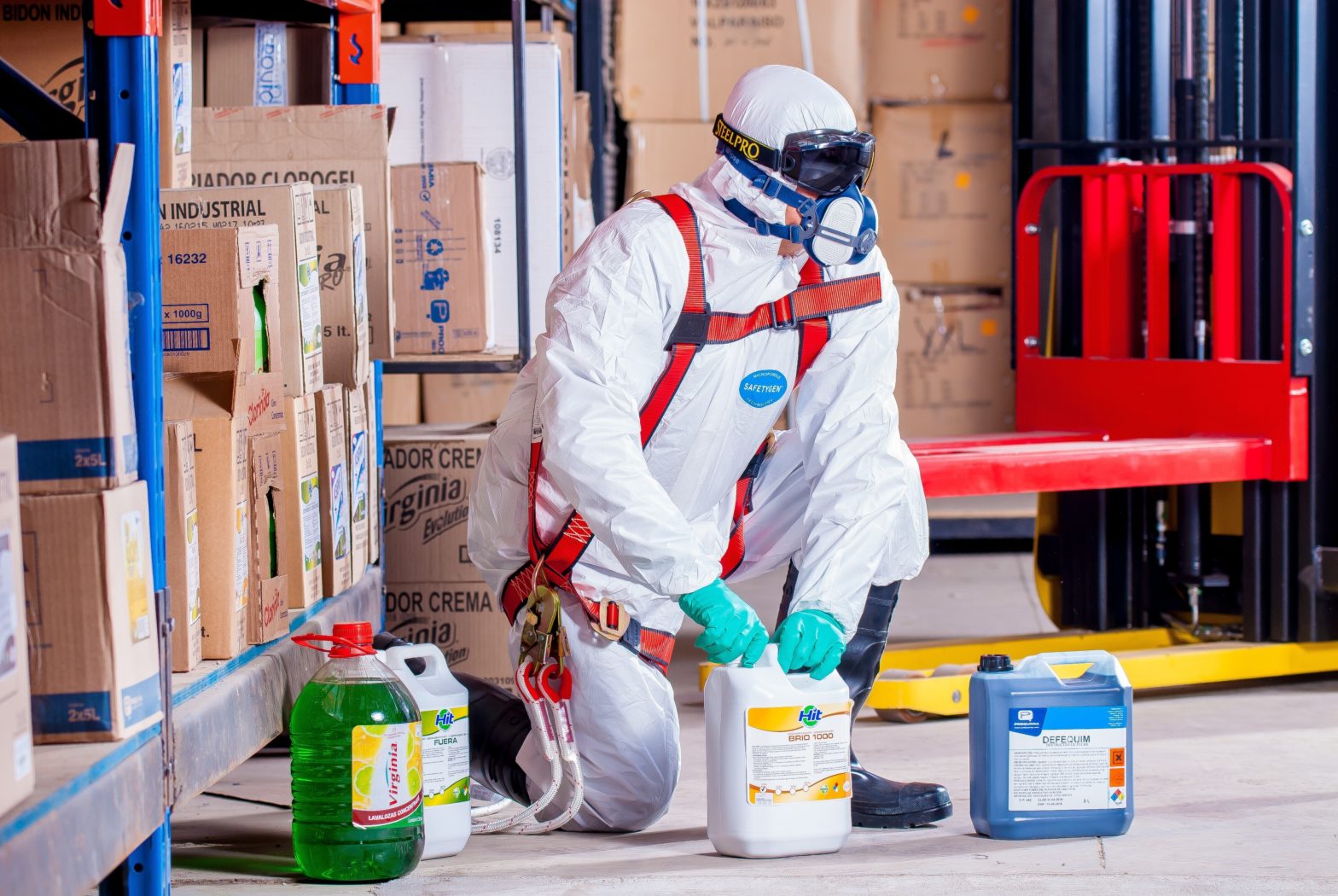
Workers who conduct cleaning tasks must be protected from exposure to blood, certain body fluids, and other potentially infectious materials covered by OSHA’s Bloodborne Pathogens standard (29 CFR 1910.1030) and from hazardous chemicals used in these tasks. In these cases, the PPE (29 CFR 1910 Subpart I) and Hazard Communication (29 CFR 1910.1200) standards may also apply. Do not use compressed air or water sprays to clean potentially contaminated surfaces, as these techniques may aerosolize infectious material.
See the interim guidance for specific worker groups and their employers, below, for further information.